Mortgage Matters With Integrity

Written & Prepared by:  Brian Tilton

March 16, 2025

Interest Rate Trends

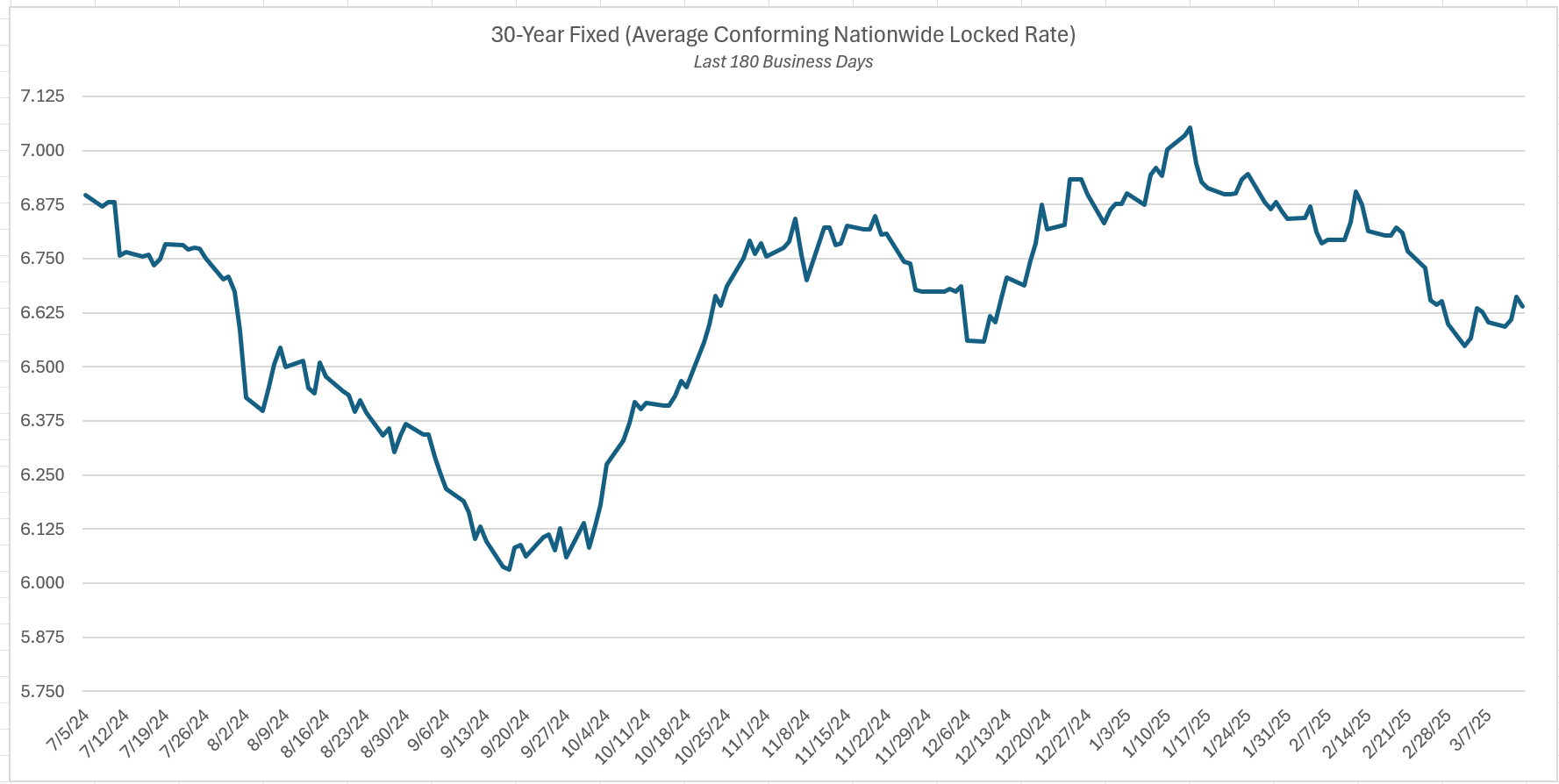
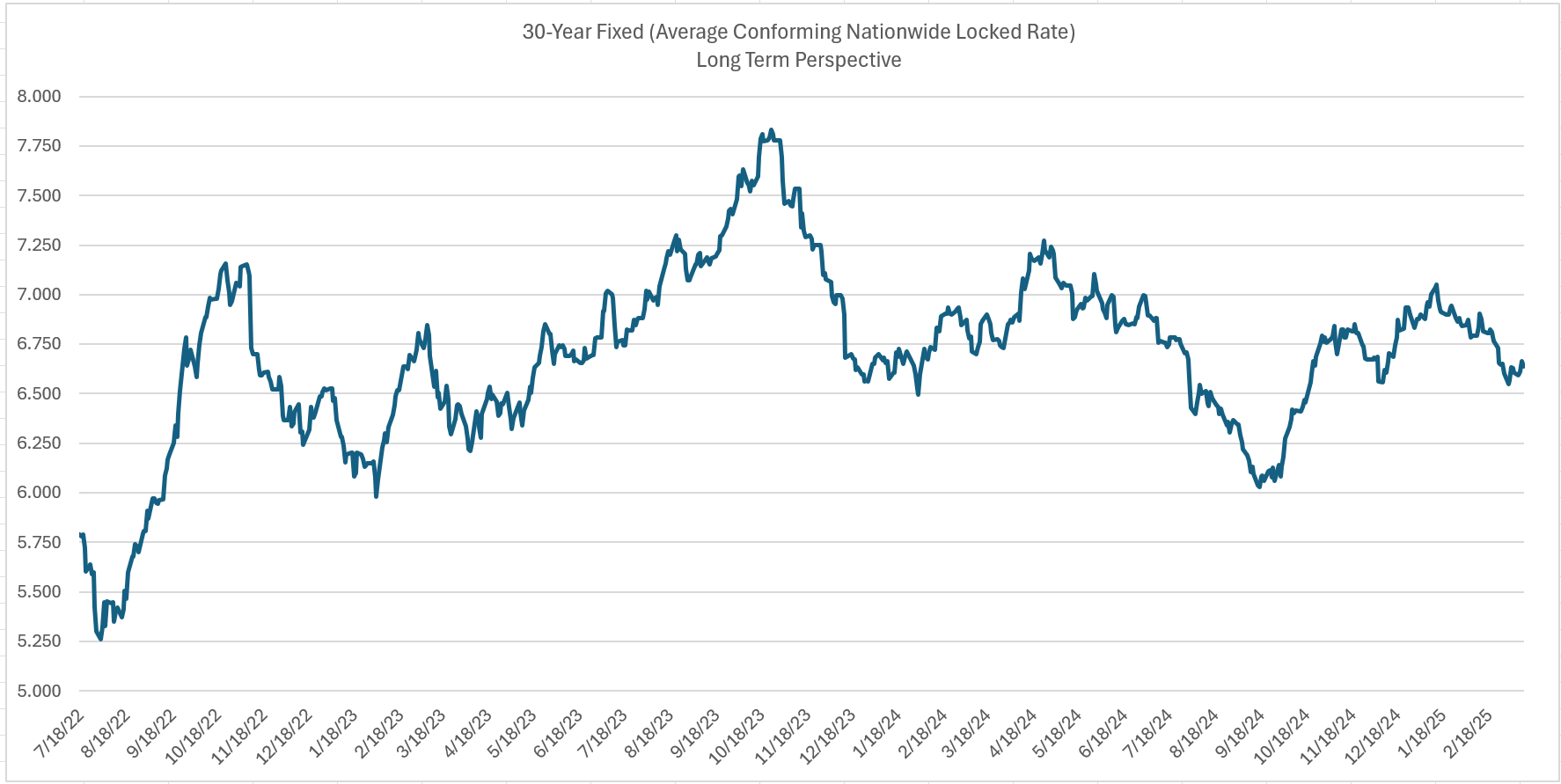
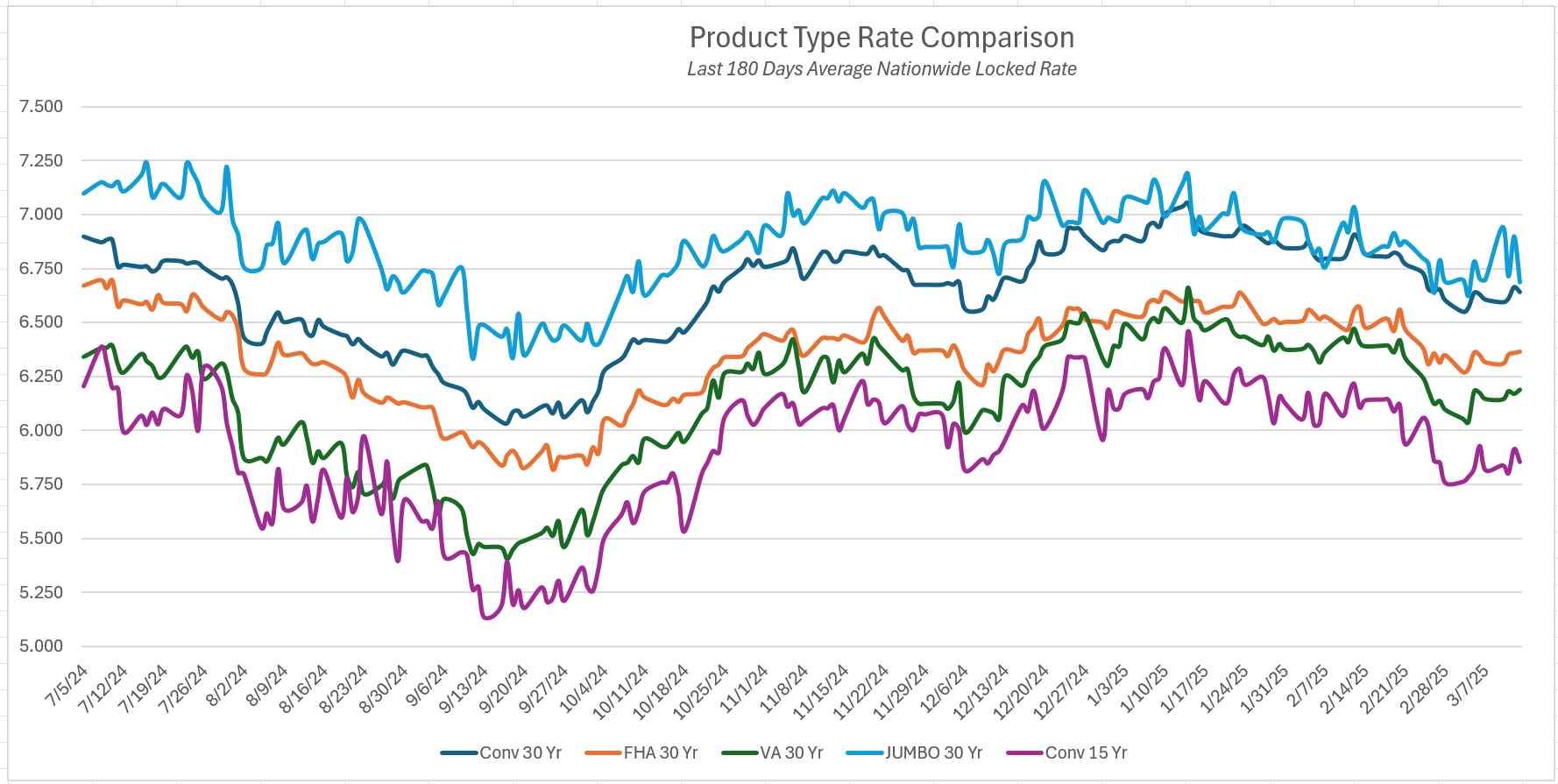
As of March 13th, the average conventional 30-year rate for loans locked across the nation was 6.64%. (Note: this as reported for all lenders, not specific to Integrity Capital, whose rates are generally significantly lower than the average.)  This is a 0.04% (4 basis points) increase on a week-over-week basis, and a pause to the 3+ month rate lowering trend, that had been long overdue welcome news to borrowers and home buyers.   Factors impacting this include the following:

  • Trade Policies and Economic Uncertainty: The implementation of new tariffs by the Trump administration has introduced volatility in financial markets. Investors are concerned about potential economic slowdowns and inflationary pressures resulting from these trade measures, leading to fluctuations in bond yields and, consequently, mortgage rates.

  • Federal Reserve’s Monetary Policy: The Federal Reserve is closely monitoring the economic impact of trade tensions. While no immediate changes to interest rates have been announced, the Fed meets on March 19th and its stance and future policy decisions are critical factors that could influence mortgage rates in the coming months.

  • Stock Market Volatility: The stock market has declined significantly the past few weeks and historically such declines lead to a decrease in housing demand. A significant drop in stock values can affect consumer confidence and spending, which in turn impacts mortgage rates.

Fed Watch

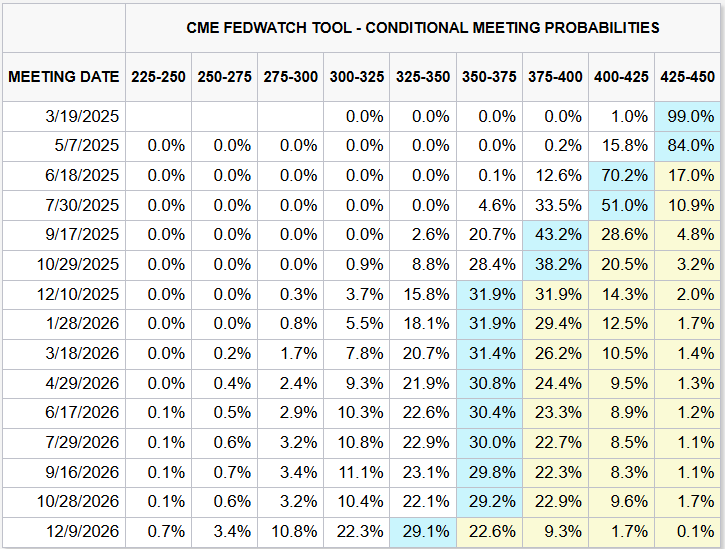
Financial markets are currently pricing in a paltry 1% probability of a 25 basis point cut in the fed funds rate.  Therefore a 99% probability of no change in rates at this meeting.

Looking further out to the May 7th FOMC meeting, the market is pricing in a 15.8% probability of a 25 basis point cut. These probabilities dropped during the past week for the following reasons:

Persistent Inflationary Pressures: Recent data indicates that inflation remains above the Federal Reserve’s target, leading policymakers to adopt a more cautious stance on reducing interest rates.

Market Volatility and Economic Uncertainty: Ongoing trade tensions and recent stock market corrections have heightened economic uncertainty. While these factors might typically prompt rate cuts to stimulate the economy, the Fed appears to be weighing the potential risks of easing monetary policy amid persistent inflation.

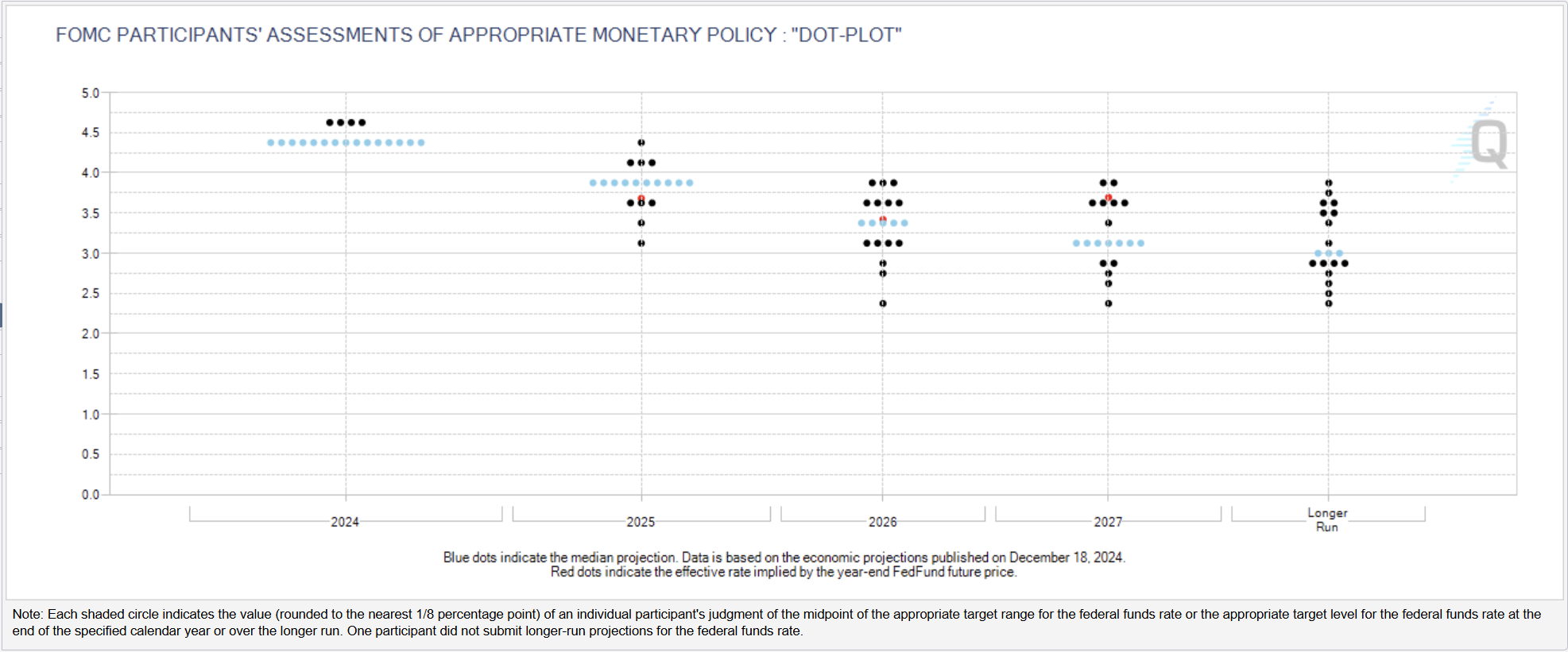
By the end of 2025, there is a 52% probability the fed funds rate will be at least 75 basis points lower and a 20% probability the rate will be at least 100 basis points lower.

However, its important to understand that these probabilities fluctuate up and down on a daily basis. based on an array of economic data.

​Next FOMC Meeting:  Wednesday, March 19

 Current Fed Funds Rate Range:  4.25% – 4.50%

​Learning Opportunity

Question:  Considering the fed funds rate is a short-term, 1 day overnight rate, while mortgage rates are long-term rates generally 30 years, why is this even relevant to watch?

Answer:  The economic factors the cause the federal reserve to adjust rates are highly correlated with the factors that also influence long term rates.  The Fed does not directly set mortgage rates but it strongly impacts market perseption. A rate hike suggests a strong economy (which can push mortgage rates higher), while a rate cut signals economic concern (which can lower mortgage rates).

*A more detailed explanation can be found in the Mortgage Mentor Blog section of our website.


Smart Strategies to Boost Your Credit Score 

& Secure a Better Mortgage Rate

Your credit score plays a major role in determining your mortgage rate and loan approval terms. A higher score can mean lower monthly payments and thousands in savings over the life of your loan. Here are some proven strategies to improve your score:

1️⃣ Pay Bills on Time – Every Time

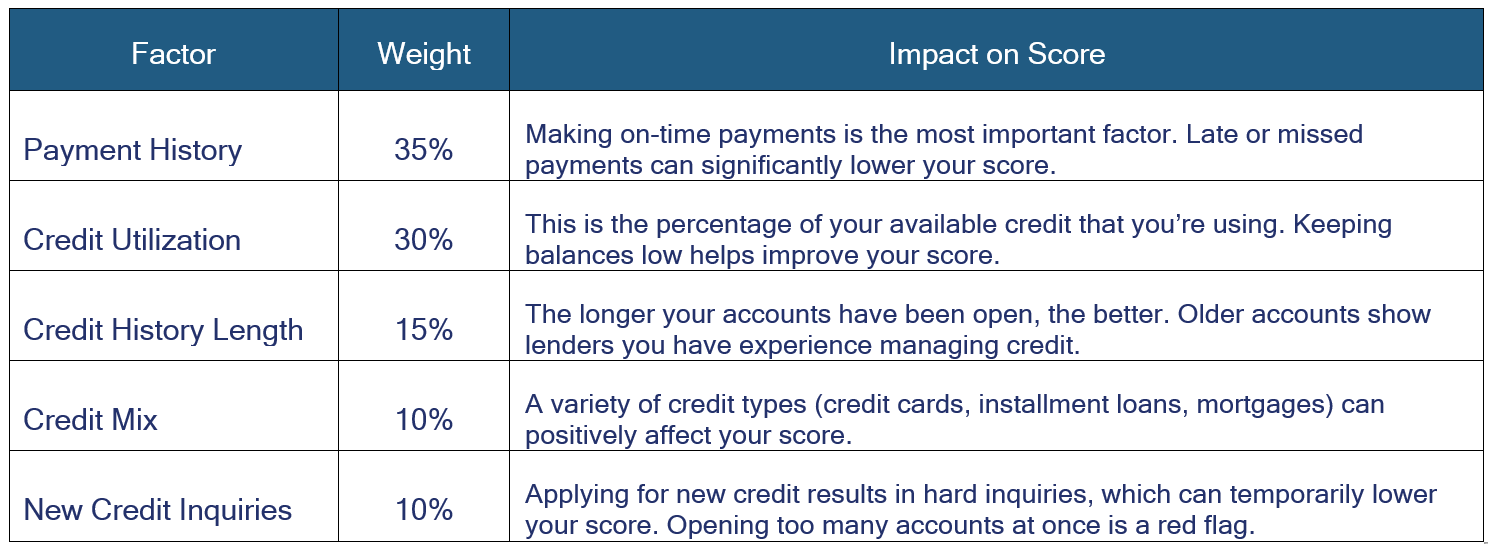
📌 35% of your credit score is based on payment history. Even one late payment can lower your score.
✔ Set up autopay or calendar reminders to avoid missed payments.

2️⃣ Lower Your Credit Utilization Ratio

📌 This is the percentage of available credit you’re using. Ideally, keep it below 30%, but under 10% is best.
✔ Pay down credit card balances before the statement date.
✔ Consider asking for a credit limit increase (but don’t add more debt!).

3️⃣ Avoid Opening or Closing Accounts Before Applying for a Mortgage

📌 New credit inquiries can temporarily lower your score, and closing old accounts reduces your credit history length.
✔ Hold off on opening new credit cards, car loans, or financing purchases before applying for a mortgage.

4️⃣ Check Your Credit Report for Errors

📌 1 in 5 credit reports contain errors that can hurt your score.
✔ Get a free copy at AnnualCreditReport.com and dispute any mistakes.

5️⃣ Diversify Your Credit Mix

📌 A mix of credit types (credit cards, auto loans, installment loans) can boost your score—but only when managed responsibly.

6️⃣ Keep Old Accounts Open

📌 Older accounts improve your credit age, which makes up 15% of your score.
✔ If possible, keep old credit cards open (especially those with no annual fee).


How Your Credit Score is Calculated

Credit scores are based on five key factors, each with a different level of influence:

Key Takeaways for Borrowers

✔ Prioritize on-time payments – Even one missed payment can have a lasting negative effect.

✔ Keep credit utilization under 30% (ideally below 10%) for a better score.

✔ Don’t close old accounts – Longer credit history helps your score.

✔ Be strategic with new credit – Too many inquiries in a short time can lower your score.

✔ A diverse credit mix can help, but don’t take on unnecessary debt just for a better mix.

Economic Calendar

Question:  Why should I stay abreast of upcoming economic news?

Answer: Financial markets react to disparities between expected versus actual economic data.  On days where highly anticipated economic data is released there is a greater likelihood of heightened volatility (risk).  This is particularly relevant if you are locking it a rate.

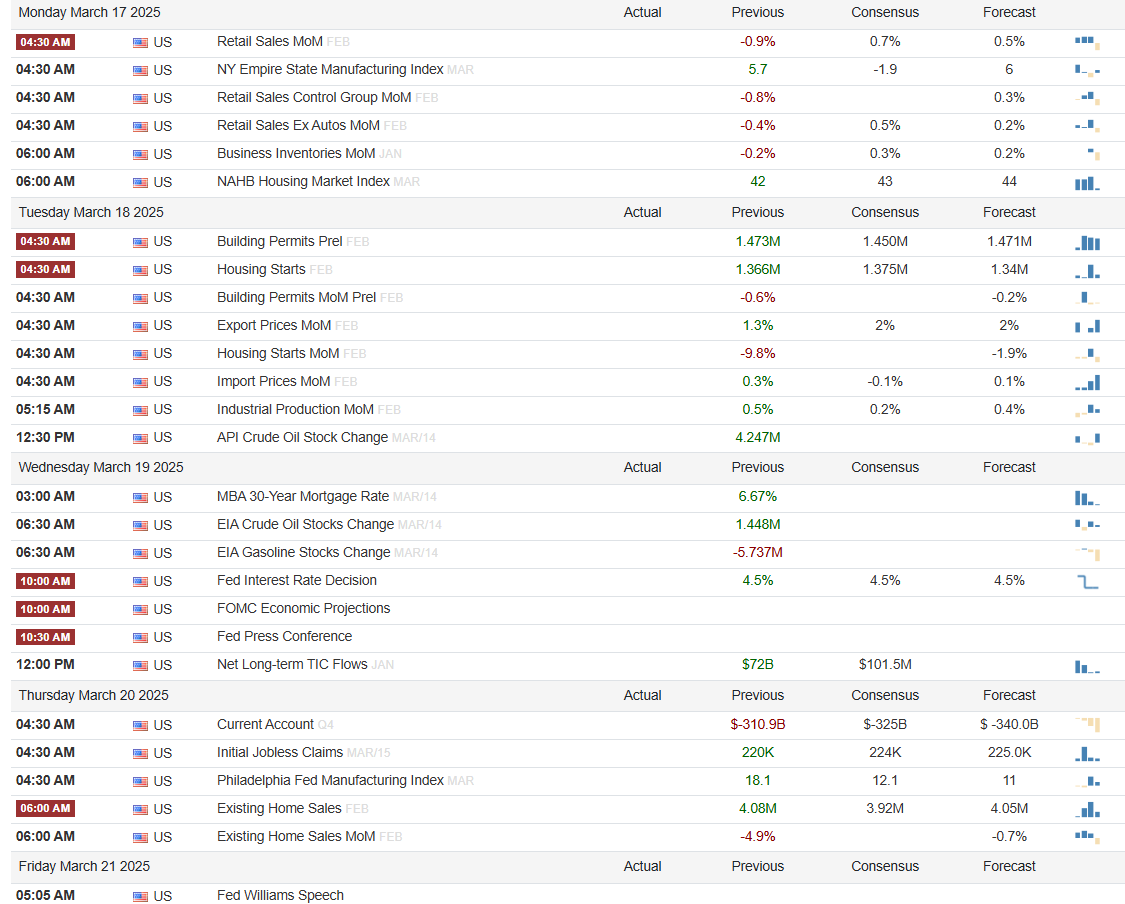
This coming week, there is a slew of economic data being released, many of which have the potential to move financial markets.  Items to pay particular attention to are the following:

  • Retail sales (Monday)

  • The FOMC (fed) interest rate decision (Wednesday)

  • Existing Home Sales  (Thursday)

Mortgage Myths

Myth:  “I should Use My Bank for My Mortgage Needs”

Many homebuyers incorrectly assume that getting a mortgage from their current bank is the best option. While it may seem convenient, this can often be a costly mistake. Here’s why:

🔹 Banks Have Higher Costs – Large banks have higher overhead and pass through those costs to borrowers in the form of higher rates and fees. Mortgage brokers, on the other hand, operate with lower operational and administrative costs and can pass the savings on to you.

🔹 Limited Options – Banks only offer their own loan products, while brokers have access to multiple investors, generally resulting in better pricing and more flexible guidelines.

🔹 Personalized Service – Big banks process thousands of loans, meaning you’re often just a number in a bureaucratic system. A broker provides one-on-one guidance, ensuring you get the best loan for your unique financial situation.

The Bottom Line?

Working with a mortgage broker can mean lower rates, fewer fees, and a loan tailored to your needs—not just what a bank happens to offer. Shopping around could save you thousands over the life of your loan!

Housing Corner

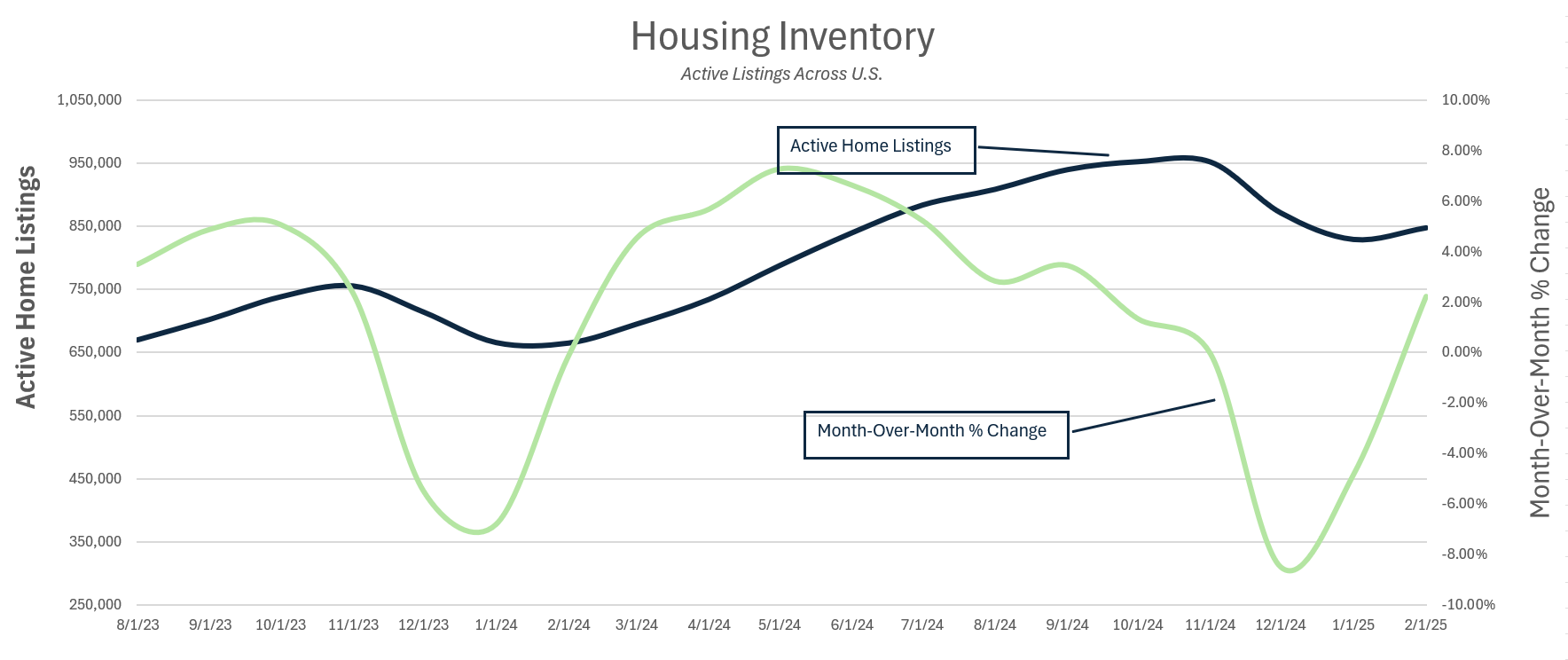
After 3 months of declining available home inventory across the U.S., the number of available homes listed for sale increased 2.2% in Feb.  This is welcome news for potential buyers searching for new homes.  Seasonality is a contributing factors as there is generally an increase in homes listed for sale as we get closer to the spring months.  It remains unknow whether this will prove to be a sustained trend.


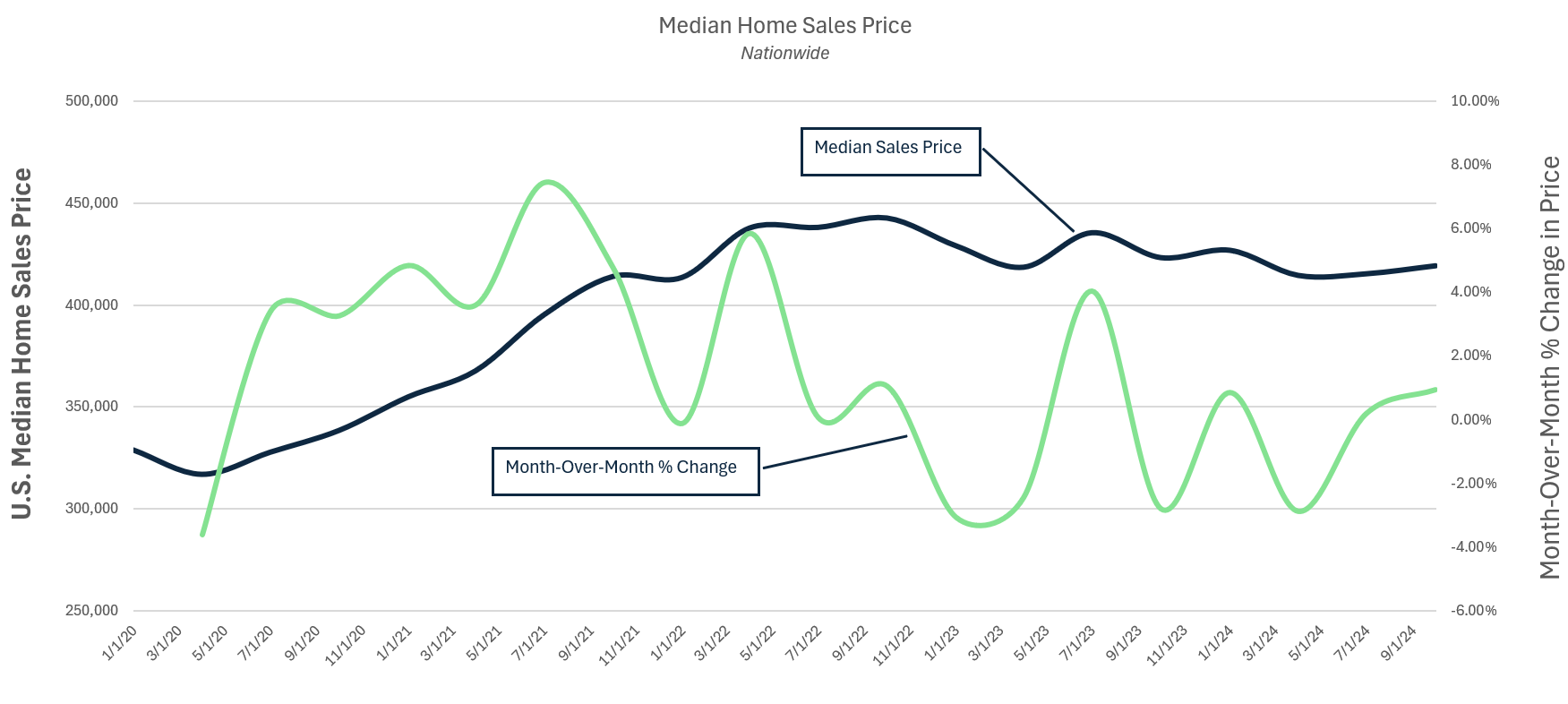
The most recent reported median sales prices for all homes sold across the nation, came in at $419,200.  Overall home affordability is constraining this number.


Leave a Reply

Your email address will not be published. Required fields are marked *

Apply Now