
Mortgage Products Built Around You
Choosing the "best" mortgage product is not a one-size-fits-all solution. It’s about matching the right product to your specific goals, credit profile, down payment, property type, and timeline.
We offer Conventional, FHA, VA, USDA, Jumbo, Non-QM, DSCR, HELOC, and closed-end second-lien options. Below is a straightforward overview of each. We’ll walk through the real trade-offs with you so you can decide with eyes open—no pressure, no surprises.
Conventional
What it is: A conventional loan is not directly insured or guaranteed by the U.S. government. However, there is an "implicit" guarantee by Fannie Mae and Freddie Mac.
Who are Fannie Mae and Freddie Mac—and why do they exist? Fannie Mae and Freddie Mac are government-sponsored enterprises (GSEs). They were created decades ago to make homeownership more widely available by creating a strong secondary mortgage market.
Here’s how it works in plain English: A lender closes your mortgage. Instead of keeping that loan on its books for 30 years, the lender can sell it to Fannie or Freddie. Those agencies package thousands of loans into mortgage-backed securities and sell them to investors. This frees up the lender’s capital so they can close more loans.
Because Fannie and Freddie have an implicit government relationship, investors treat the securities they issue as extremely safe. That lower risk means investors accept lower yields, which ultimately translates into lower interest rates for borrowers who qualify for a “conforming” conventional loan.
Who is this Loan Type Best for: Borrowers with strong credit, stable documented income, and the ability for a larger down payment.
Key points for you
- Mortgage insurance is not required if the down payment is 20% or more. This lowers the monthly payment.
- Mortgage insurance can usually be canceled once you reach 20% equity.
- Often the lowest rates when you fit the guidelines and have strong credit.
- Guidelines are stricter than government programs on credit, debt ratios, and reserves.

FHA
What it is: An FHA loan is explicitly insured by the Federal Housing Administration (part of the U.S. Department of Housing and Urban Development). The government promises to protect the lender if the borrower defaults.
Why the insurance matters Because the loan carries an explicit government guarantee, investors demand less of a risk premium. That is one of the main reasons FHA rates are often very competitive—especially for borrowers who might not qualify for the best conventional pricing. The trade-off is that you pay for that insurance through an upfront Mortgage Insurance Premium (MIP) and an ongoing annual MIP.
Best for: First-time buyers, borrowers with lower credit scores or smaller down payments, and people recovering from past credit events (bankruptcy, foreclosure, late payments). Waiting periods after major credit events are generally shorter than with conventional loans.
Key points for you
- Down payment as low as 3.5%.
- More flexible debt-to-income (DTI) guidelines.
- Permits lower credit scores than conventional loans.
- Mortgage Insurance (MIP) typically lasts for the life of the loan. MIP has two components:
- Upfront: This is a one-time 1.75% of the loan amount, payable at closing.
- Monthly: This is an ongoing payment usually equal to 0.55% annually.
VA
What it is: A VA loan is guaranteed by the U.S. Department of Veterans Affairs. Eligible veterans, active-duty service members, and certain surviving spouses can use this benefit.
Why the guarantee matters The VA guarantee significantly reduces the lender’s risk. As a result, VA loans usually offer excellent interest rates and do not require monthly private mortgage insurance (PMI). Instead of PMI, most borrowers pay a one-time VA funding fee, which can be financed into the loan.
Best for: Eligible veterans borrowers who want maximum purchasing power with little or no down payment and no monthly mortgage insurance.
Key points for you
- $0 down payment on most purchases.
- No loan amount limit.
- No monthly PMI.
- Loans are assumable.
- VA loans are assumable.
- Requires a one-time VA funding fee. The specific funding fee rate varies by a variety of factors but a guideline is as follows:
- No down payment:
- First-time using a VA loan: 2.3%
- Borrowers with a previous VA loan: 3.3%
- Down payment of 5% - 9%: 1.5%
- Down payment of 10% or more: 1.25%
- No down payment:
- VA loans are only permitted on primary residences.

USDA
What it is: USDA loans are backed by the U.S. Department of Agriculture and are designed to help low to moderate income buyers purchase homes in eligible rural and some suburban areas.
Why the government backing matters: Because the loan carries a government guarantee, investors have risk exposure. That lower risk helps keep interest rates competitive. USDA loans do not have traditional monthly mortgage insurance, though most USDA loans use a modest upfront guarantee fee and a small annual fee.
Two key eligibility requirements (both must be met)
- Property location — The home must be in a USDA-designated eligible area. Many suburban-feeling communities still qualify. You can check any address instantly on the official USDA eligibility map: https://eligibility.sc.egov.usda.gov/
- Household income limits — The total adjusted household income cannot exceed 115% of the Area Median Income (AMI) for that county and household size. Limits vary by location and number of people in the household.
Best for: Moderate-income to lower-income buyers who want zero-down financing and are purchasing in a qualifying geographic area.
Key points for you
- No down payment required.
- Both the property location and household income limits must be met.
- The home must be your primary residence.
- No cash reserves are required.
Jumbo Non-Conforming
What it is: A jumbo loan exceeds the conforming loan amount limits set each year by the Federal Housing Finance Agency (FHFA). Because these loans are too large for Fannie Mae or Freddie Mac to buy under their standard programs, they are held by private investors or banks.
Why rates are often higher: Without the GSE liquidity and implicit backing that conforming loans enjoy, investors take on more risk and therefore require a higher yield. That higher risk premium usually shows up as a higher interest rate and stricter qualification standards (larger down payments, stronger credit, more reserves).
Best for: Higher-priced homes or loan amounts above the conforming limit for your county.
Key points for you:
- Larger loan amounts up to $5 million.
- Usually a larger down payment is required.

Non-QM
What it is: Non-QM (Non-Qualified Mortgage) loans do not meet the Consumer Financial Protection Bureau’s Qualified Mortgage rules. They exist for borrowers whose income, credit history, or situation doesn’t fit the standard conventional or government boxes.
Why they cost more: These loans generally cannot be sold to Fannie, Freddie, or the major government programs, so the investor takes on more risk. That extra risk is priced into a higher interest rate and sometimes higher fees. In exchange, you get meaningful flexibility—bank-statement qualification, asset-based qualification, recent credit events, and more.
Best for: Self-employed borrowers, those with complex or non-traditional income, recent credit challenges, or unique property situations.
Key points for you:
- Flexibility: Non-QM loans have less restrictive eligibility criteria, making it easier for self-employed individuals or borrower’s with unique financial situations to qualify.
- Higher loan amounts: Non-QM loans generally allow for larger loan amounts compared to conventional mortgages.
- Alternative documentation: Many non-QM products allow alternative forms of income documentation.
DSCR
What it is: Debt-Service Coverage Ratio loans are underwritten primarily on the property’s expected rental income rather than the borrower’s personal W-2 or tax-return income.
Why they work differently The investor is mainly concerned with whether the property can cover its own debt service. This makes DSCR loans attractive for real estate investors (including those buying in an LLC) who want to scale without traditional income documentation.
Trade-off: Rates are typically higher than conventional financing because the loan is evaluated differently and usually cannot be sold into the agency market.
Key points for you:
- Faster Approval: DSCR loans streamline the process.
- Investors can qualify for multiple properties.
- You can generally buy properties under a LLC.
HELOC
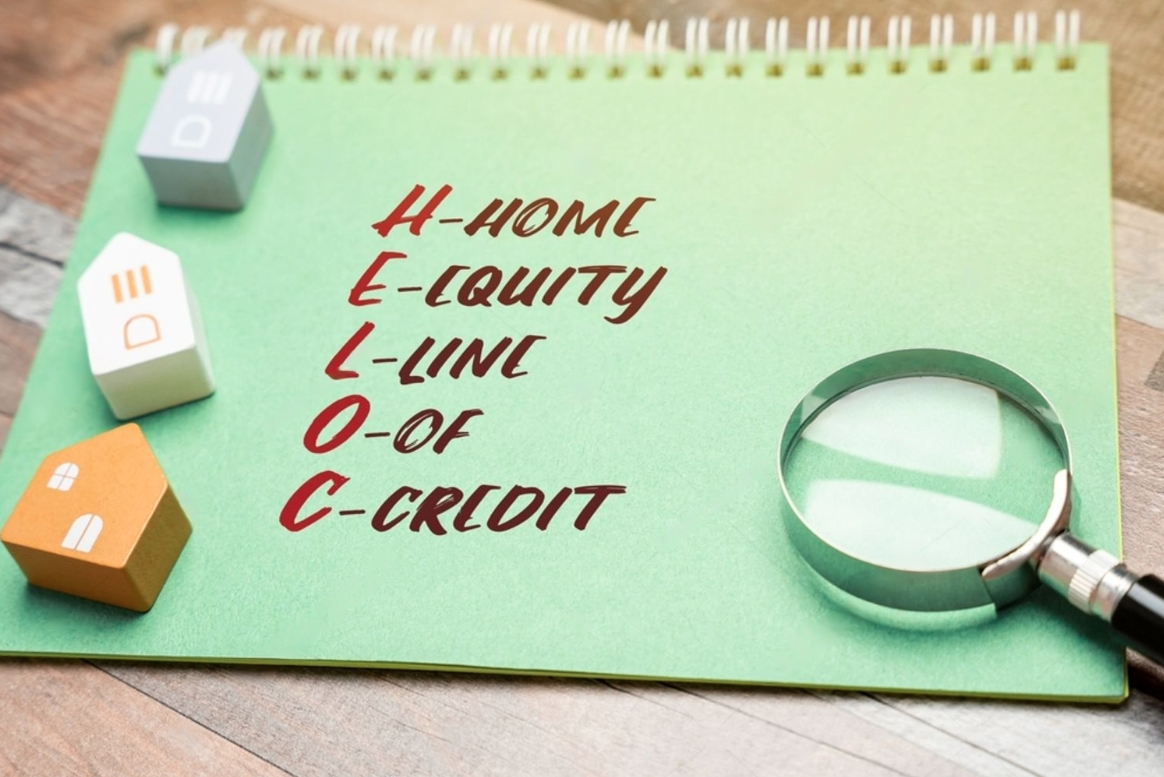
What it is: A revolving line of credit secured by your home’s equity. You draw what you need, when you need it, and pay interest only on the amount you actually use.
When it often makes more sense than a cash-out refinance If your current first mortgage rate is significantly lower than today’s rates, leaving that first lien alone and adding a HELOC behind it can produce a lower weighted-average rate than refinancing the entire balance.
With a HELOC your first lien remains intact at whatever your current rate is, and a second lien is behind it. The key number to focus on is your weighted average rate. We will provide you with this information so so can make an informed decision.
Closed-End Second Liens (Home Equity Loans)
What it is: A closed-end second lien (also called a home equity loan) is a fixed-amount second mortgage placed behind your existing first mortgage. You receive the full loan amount in one lump sum at closing and repay it over a set term with fixed monthly payments—similar to a traditional installment loan.
This is different from a HELOC. With a HELOC you have a revolving line of credit you can draw from as needed. With a closed-end second, the amount is fixed, the rate is usually fixed, and the payment is predictable from day one.
Why borrowers often choose a second lien instead of a cash-out refinance If your current first mortgage has a significantly lower interest rate than today’s market rates, refinancing the entire balance into a new first mortgage can raise your overall cost of borrowing. A closed-end second lets you leave the low-rate first mortgage untouched while still accessing the equity you need.
The key number to focus on is your weighted average rate — the blended cost of the first mortgage plus the new second lien. We calculate this for you so you can clearly see whether the second-lien strategy is more advantageous than a full refinance.
Best for Homeowners who need a lump sum for a specific purpose (home improvements, debt consolidation, education, major expenses, or investment opportunities) and prefer the certainty of fixed payments and a locked rate, while preserving a favorable first-mortgage rate.
Key points for you
- Fixed loan amount, fixed rate, and fixed payment.
- Does not disturb your existing first mortgage.
- Approval is based on combined loan-to-value (CLTV), credit, income, and the overall strength of your mortgage picture.
- Terms commonly range from 5 to 20–30 years depending on the program and investor.