If you’re feeling priced out of California’s expensive housing market, you’re not alone—But
did you know there are first-time homebuyer programs that can significantly reduce or even
eliminate your down payment and closing costs?
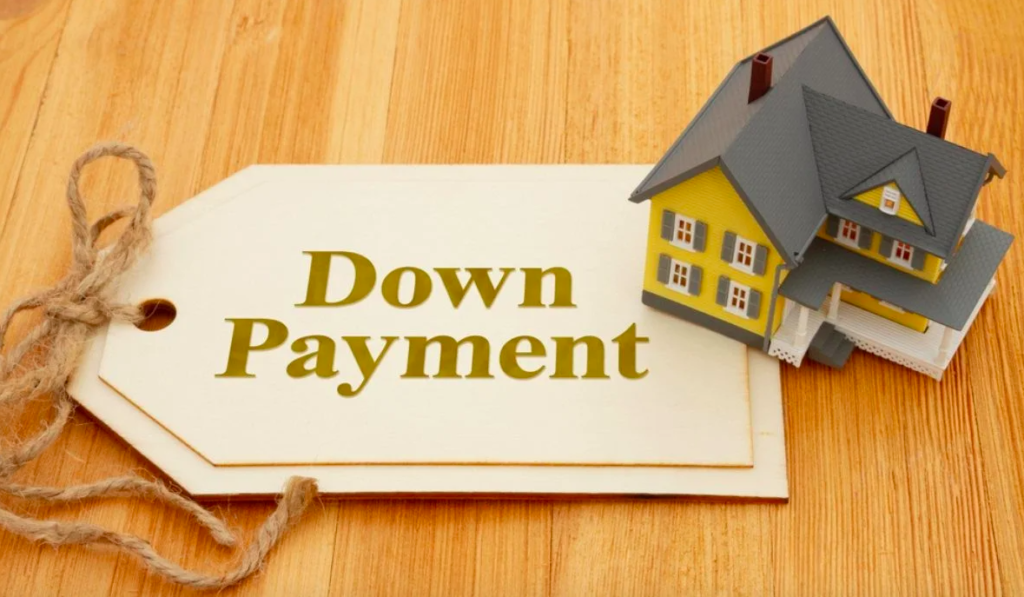
An astonishing number of Down Payment Assistance (DPA) programs oƯer thousands—or
even tens of thousands—of dollars through deferred-payment loans, low or no-interest
loans, and in some cases forgivable loans or grants. These subsidized and non-profit
programs can make the dream of home ownership a reality for buyers who qualify and who
work with lenders who know where to look.
Here’s the insider’s guide to how these programs work, who qualifies, and why it might be
one of the smartest financial moves you can make.
What Is Down Payment Assistance (DPA)?
A Down Payment Assistance program helps homebuyers cover their initial down payment
and often closing costs—making the upfront hurdle of homeownership easier or, in some
cases, almost disappear.
How it works: DPA is typically delivered as a second or third-lien loan (behind your
main first-lien mortgage), a grant, or in some cases an entirely forgivable loan. Let’s
break down this terminology in more detail.
First lien loan: Your main mortgage remains a standard loan—most often
FHA, VA, or conventional—while the DPA sits “behind” it as support.
Grant
What it is: Free money—a cash gift to help cover your down payment
or closing costs.
Repayment: Never repaid; no lien on your property.
Example: If you receive a $10,000 grant, you simply use it at closing
like part of your own savings.
Forgivable Loan
What it is: Usually a second lien loan, but the best part is, if you
follow the rules (usually living in the home for 3–5 years), the debt
disappears.
Repayment: If you meet program terms (such as owner-occupancy
for required years), you owe nothing back. Move or refinance early and
you might owe a prorated amount
Second or Third Lien (Subordinate Loan)
What it is: A loan from the DPA program, recorded after your main
(first lien) mortgage. It may be deferred (no payments until you
sell/refi), or require payment with low or no interest. (Terms vary
depending on the specific DPA program)
Repayment: Varies by program. Some have no payments and 0%
interest. Usually paidt back only if/when you sell or refinance.
Where Does the Money Come From?
Most DPA programs draw on funds provided by:
State housing finance agencies
Local government or municipal housing funds
Federal block grants
Nonprofit or employer partnerships
These programs use dedicated housing funds, state bond proceeds, and even re-invested
repayments from previous DPA recipients. It’s a win-win scenario—homebuyers benefit
from a highly attractive “subsidy”, while the agencies and municipalities make an
investment in stable communities that serves the public best interest.
Who Are These Programs Intended For?
Most California DPAs target first-time homebuyers but there are exceptions. Typical
intended beneficiaries include:
Low to Moderate income Californians
Renters who haven’t owned a home in the last three years
Teachers, first responders, or “community heroes”
Buyers in specific target areas
Income, Geographic, and Qualifying Limits
Contrary to popular perception, income and eligibility boundaries are surprisingly broad.
(This next section is in generalities since each DPA program is slightly diƯerent.)
Income Limits
o Generally, income limits are based on HUD’s area median income (AMI)
calculations, adjusted for each county’s cost of living and household size. It
may shock you to hear the income limit for a popular CA DPA is $270,000 for
Orange County and $325,000 for Marin County! Some other programs are
more granular using 80% of the census track AMI. Integrity Capital Mortgage
is happy to provide the precise income limits for a specific address.
Geographic Limits
o Some DPAs (LAHD LIPA) are limited to buyers within specific cities or ZIP
codes
o Others, like (CalHFA, EQUO), are available statewide.
Qualifying Considerations
o Most require:
A minimum credit score (often at least 640–660 for FHA or
conventional)
Completing an approved homebuyer education course
Occupying the home as your primary residence
Adhering to purchase price caps (which are often much higher than
you expect—sometimes over $1 million)
Verifiable income, typically with a two year history.
First-time Homebuyer
o Usually— but not always—a requirement
Forgivable Loans, Deferred Interest, and What They Mean
Forgivable loans: If program conditions are satisfied (such as living in the home for
5 years), the DPA may be fully forgiven—meaning you keep the money with no
repayment.
Deferred interest: Many DPA loans have 0% interest and no payments until you sell
your home, refinance, or pay oƯ your primary mortgage. Some accrue interest in the
background; others remain completely interest-free during the deferred period.
Restrictions On Selling, Refinancing, or Occupancy
Home Sale/Refinance: Most DPA require repayment upon selling the home,
transferring title, or refinancing the first mortgage.
Primary residence: You must occupy the property as your principal residence,
usually for 3–5 years minimum (sometimes longer for full forgiveness). Second
homes and investment properties are not eligible.
No “flipping”: Buying and selling quickly isn’t allowed. Violating terms usually
means repaying the assistance in full (plus deferred interest, if applicable).
A Few Notable DPA Programs to Explore
CalHFA MyHome Assistance: Up to 3.5% of the purchase price or appraised value
toward down payment/closing costs—as much as $21,000 on a $600,000 home.
Municipal Programs (e.g., LAHD LIPA, MIPA): Grants or 0% interest loans from
$7,500 up to $90,000+ per eligible household, and often no monthly
payment required for years!
EQUO DPA: Up to 5% of the loan amount for down payment/closing cost support.
Popular DPA Programs (Summary of Terms)
CalHFA MyHome LAHD LIPA Equo DPA
Assistance Type Second Lien Loan Second Lien Loan Second Lien Loan
Assistance Amount 3.5% of Sales Price Up to $161,000 2.5%, 3.5% or 5% of Sales
Price
Funds are used for Down payment and/or
Closing Costs
Down payment, closing
costs, home acquisition
. Down payment and/or
closing costs
Deferred Payments
Yes (no payments
required). 1% Interest
acrues)
Yes (no payments
required)
No. Payments begin after
closing. 10 Year
amortization term
Forgivable
No. Repayment is due
upon home sale, title
transfer, or martgage
payoff
No. Repayment is due
upon home sale, title
transfer, or martgage
payoff
No. Repayable in 10 Years
or upon home sale, or
mortgage payoff
Geographic Limits Yes (California Only) Yes (Los Angeles Only) No
First-Time Homebuyer
Only Yes Yes No
Income Limits Yes (Varies by County) Yes (Varies by household
size) No
Minium Credit Score 640 (varies by DTI) 660 580
Homebuyer Education
Required Yes Yes Yes
Homebuyers Minimum
Down Payment N/A 1% N/A
Shared Appreciation
Component No Yes No
Other Used with CalHFA First
Lien Mortgage. Rate is 1%
Specific Reservation
schedule (limited
reservations)
Used in Conjunction with
an FHA Loan. Rate is 2%
higher than first lien loan
rate.
Eye-Opening Facts for Borrowers
You don’t need to be low-income: “Moderate” income can still qualify—six-figure
earners in many parts of California are eligible.
Homebuyer education is a simple task: Most programs require a low-cost or free
course. Completion may open the door to tens of thousands in benefits.
You don’t always have to be a first-time buyer: Some programs allow exceptions
for those who haven’t owned in the last three years or for buyers in certain
“targeted” areas.
You can often combine DPA programs—stacking state, city, and sometimes
employer-sponsored DPA for even more assistance.
The Bottom Line: Don’t Miss Out on this Lucrative Homebuying Support!
If you’re thinking about buying, you owe it to yourself to investigate Down Payment
Assistance. California oƯers more—and larger—programs than almost any other state. The
right strategy can drop your up-front costs dramatically, and for some, transform
“impossible” into “achievable.”
Curious what you qualify for? Let us run the numbers—Integrity Capital Mortgage proudly
oƯers access to CalHFA programs, EQUO DPA, LAHP LIPA, and MIPA, and many more. We
will match you to the maximum assistance available for your scenario.